

Think of light combat aircraft as the perfect middle ground between advanced trainers and full-scale fighter jets. In simpler terms, these are combat-ready aircraft that maintain the manageable size of trainer jets. This clever approach has opened doors for developing countries like India, Brazil, and many others to access cost-effective solutions for air combat and versatile operational roles.
The aviation world has been buzzing with exciting developments in light combat aircraft lately. What we’re seeing is a growing trend where air forces around the globe are discovering the incredible value these flexible, affordable platforms bring to the table when it comes to handling all kinds of mission requirements.
What is Light Combat Aircraft
When we talk about a light combat aircraft, we’re looking at a lightweight, multirole military jet that’s built to handle everything from combat missions to training exercises. These impressive machines typically tip the scales between 4,000 to 8,000 kg when empty, and they’re known for their nimble handling and significantly lower running costs when compared to their heavier fighter cousins.
Here’s what makes light combat aircraft stand out from the crowd:
These jets come with a smart, compact design featuring either single or twin-engine setups
They’re true multitaskers, capable of handling both air-to-air and air-to-ground missions with ease
The advanced avionics package includes cutting-edge radar systems and sophisticated electronic equipment
Here’s the best part – they’re remarkably cost-effective to operate, with maintenance bills that won’t break the bank
They can operate from shorter runways, which means you’ve got plenty of flexibility when it comes to where you can deploy them
Light combat aircraft really shine when it comes to mission versatility. Watch them in action during close air support operations, where they deliver pinpoint strikes to help ground forces. They’re also incredibly effective in counter-insurgency missions, especially in environments where sending heavy fighters would be like using a sledgehammer to crack a nut.
What’s particularly clever about these aircraft is their dual nature. They work brilliantly as operational platforms while also serving as advanced trainers. This versatility means air forces can keep their pilots sharp and mission-ready while conducting actual combat operations.
Modern light combat aircraft are packed with sophisticated fly-by-wire flight control systems. These smart digital systems take a lot of the workload off the pilot’s shoulders during tricky maneuvers, making the aircraft safer and more capable at the same time.
Light Combat Aircraft Weapon Power
Don’t let their compact size fool you – light combat aircraft pack a serious punch when it comes to weaponry. Modern designs feature multiple hardpoints that can be configured with all sorts of armament options depending on what the mission calls for.
Air-to-Air Weapon Systems:
Beyond Visual Range (BVR) missiles like the Astra, Derby, and I-Derby ER that can engage targets from far away
Short-range air-to-air missiles such as the R-73, Python-5, and ASRAAM for close-in dogfighting
Internal cannons ranging from 20mm to 27mm caliber for when things get up close and personal
Advanced missile warning systems and countermeasures to keep the aircraft safe
Air-to-Ground Capabilities:
Precision-guided munitions and laser-guided bombs that hit exactly where they’re supposed to
Unguided rockets and conventional ordnance for area targets
Anti-ship missiles that can take on maritime threats
Reconnaissance pods and electronic warfare equipment for intelligence gathering
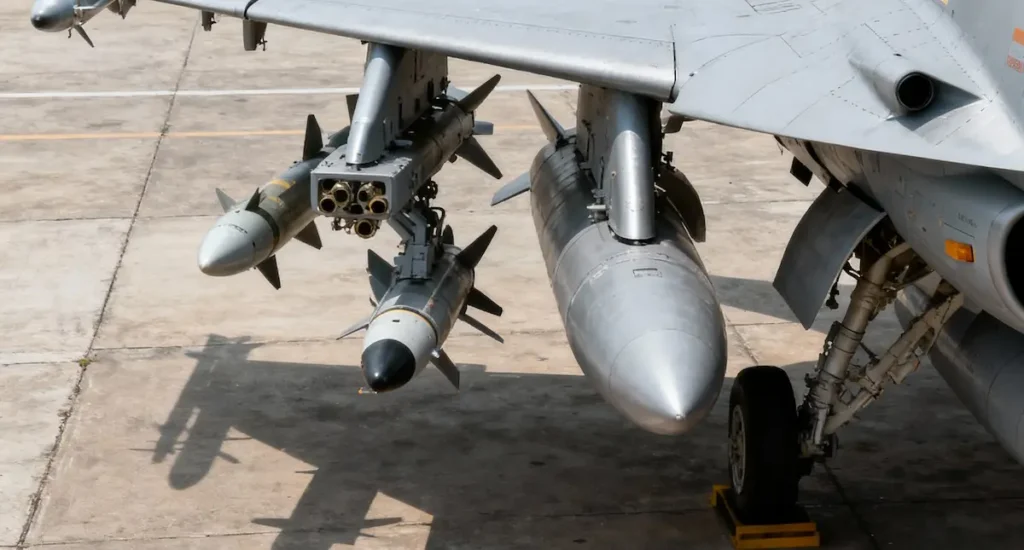
The HAL Tejas is a perfect example of how well weapons can be integrated into these platforms. It sports eight hardpoints that can handle up to 4,000 kg of payload. Plus, it’s got an internal 23mm twin-barrel cannon loaded with 220 rounds for those moments when you need firepower right now.
The M-346FA variant shows similar capabilities with its seven hardpoints carrying up to 3,000 kg of external stores. We’re talking guided missiles, bombs, rockets, and all kinds of specialized mission equipment.
What’s interesting about weapon power in light combat aircraft is the focus on precision over brute force. These platforms excel at delivering surgical strikes against specific targets while keeping fuel efficiency and operational flexibility in check.
HAL Light Combat Aircraft India
India’s HAL Tejas stands as a shining example of what indigenous aerospace programs can achieve. It’s one of the world’s most successful homegrown light combat aircraft programs. Developed by the Aeronautical Development Agency (ADA) and built by Hindustan Aeronautics Limited (HAL), this program showcases India’s impressive and growing capabilities in aerospace engineering.
Technical Specifications:
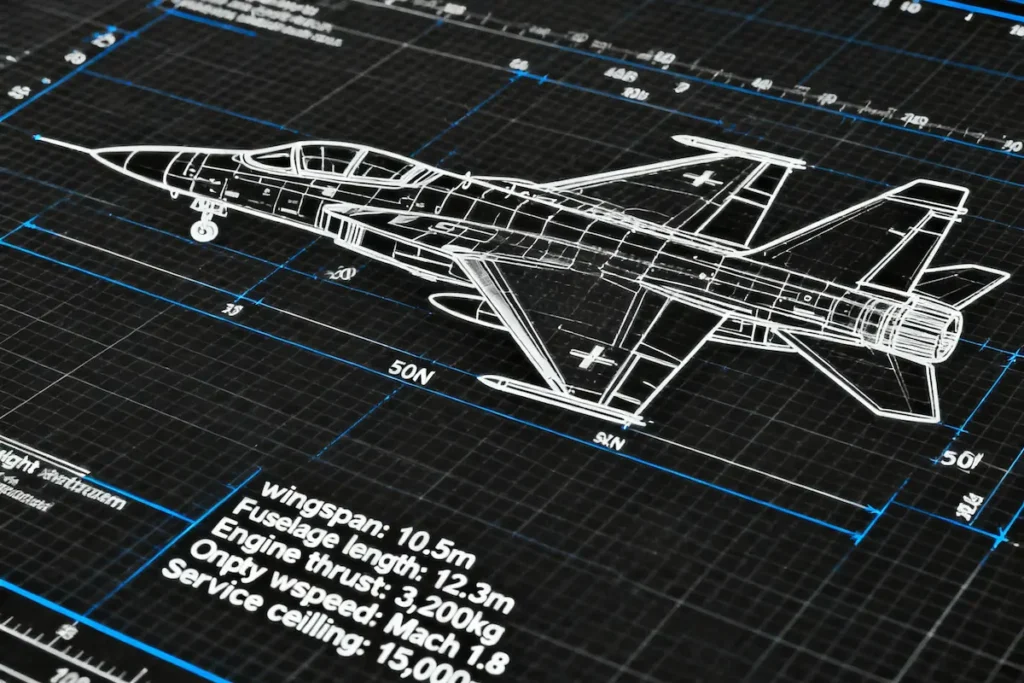
Length: 13.2 meters (43.3 feet)
Wingspan: 8.2 meters (26.9 feet)
Empty Weight: 6,560 kg (14,462 lb)
Maximum Takeoff Weight: 13,500 kg (29,762 lb)
Engine: General Electric F404-GE-IN20 turbofan delivering 85 kN of thrust
The Tejas features an innovative compound delta wing design with something called relaxed static stability. This clever configuration gives it fantastic high-speed performance while keeping it easy to handle at lower speeds – perfect for both training flights and operational missions.
The journey began way back in 1984 when India decided it was time to replace its aging fleet of MiG-21 fighters. After years of development and rigorous testing, the Tejas finally achieved Initial Operational Clearance (IOC) in 2013 and joined Indian Air Force squadrons in July 2016.
Production Variants:
Tejas Mk1: This is the basic operational version with proven, reliable systems
Tejas Mk1A: An enhanced variant featuring upgraded avionics and improved weapons systems
Tejas Trainer: A two-seat configuration specifically designed for pilot training
Tejas Mk2: The advanced variant currently under development with a more powerful upgraded engine
The Indian Air Force isn’t just dipping its toes in – they’ve committed to procuring 324 Tejas aircraft across all variants. That includes 123 aircraft already on order, with more requirements being identified for future squadrons.
What’s really impressive is that the program has achieved 59.7% indigenous content by value in the Mk1 variant. The upcoming Mk1A version is expected to push past 70% indigenous content, which directly supports India’s goal of being self-reliant in defense manufacturing.
M-346 Trainer Aircraft
The Alenia Aermacchi M-346 Master is a textbook example of modern dual-role trainer and light combat aircraft design. What started life as an advanced jet trainer has evolved into multiple variants, including configurations that are fully combat-capable.
Core Specifications:
Crew: 2 (instructor and student sitting in tandem)
Length: 11.49 meters (37 ft 8 in)
Wingspan: 9.72 meters (31 ft 11 in)
Empty Weight: 4,900 kg (10,803 lb)
Maximum Speed: 1,090 km/h (590 knots)
The aircraft runs on twin Honeywell F124-GA-200 turbofan engines, each churning out 28 kN of thrust. This powerplant setup delivers excellent reliability and fuel efficiency, making it perfect for training operations where you’re racking up lots of flight hours.
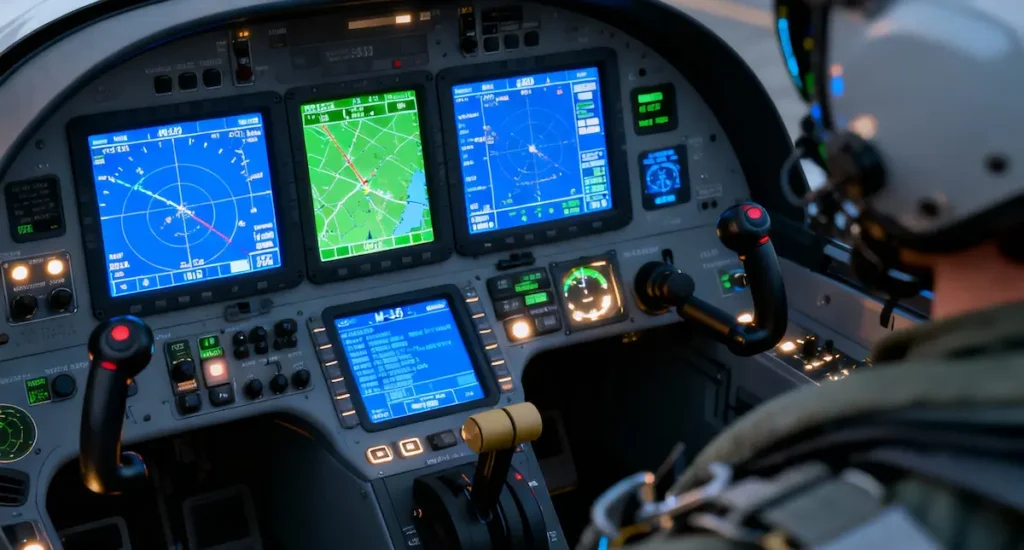
The M-346 comes equipped with full-authority digital fly-by-wire flight controls. These advanced systems let the aircraft pull off some impressive maneuvers, including angles of attack that go beyond 30 degrees. This gives trainee pilots a realistic taste of what handling a modern fighter feels like.
M-346FA Fighter Attack Variant:
The combat version takes the trainer and transforms it into a capable light fighter featuring:
Seven hardpoints that can support up to 3,000 kg of external stores
Grifo M-346 multi-mode radar for targeting both air and surface threats
Advanced electronic warfare systems complete with defensive aids
Air-to-air refueling capability so it can stay in the air longer on extended missions
The M-346FA can deploy an impressive array of weapons including IRIS-T missiles, AIM-9 Sidewinders, laser-guided bombs, and rocket pods. Its advanced mission systems enable it to handle both air-to-air and air-to-ground operations with remarkable precision.
Light Combat Aircraft Cost per Aircraft
When it comes to pricing, light combat aircraft vary quite a bit depending on their specifications, how many are being built, and how much of the content is made locally. Looking at the current market, we can see several different pricing tiers based on capability levels.
HAL Tejas Pricing Structure:
Unit Cost: ₹580-680 crore ($70-82 million) per aircraft
Recent Increase: There’s been a 17.6% price bump compared to 2021 contracts
Program Value: The total program for 97 additional Tejas Mk1A aircraft is worth ₹66,000 crore
Export Price: For international customers, the estimated price tag is around $40-50 million
Comparative Market Pricing:
M-346 Master: $15-20 million (in trainer configuration)
F-16 Fighting Falcon: $30-35 million (for older variants)
F-35 Lightning II: $80-109 million (depending on the configuration)
Dassault Rafale: $125 million (average unit cost)
Light combat aircraft offer some pretty substantial cost advantages over heavy fighters across multiple areas:
Operating Cost Benefits:
An F-16C costs about $22,500 per flight hour, while an F-15C runs you $41,900
Maintenance is simpler, which means you need fewer ground crew members
Spare parts don’t cost as much because the systems aren’t as complex
Training becomes more efficient, letting you squeeze more flight hours out of your budget
Lifecycle Cost Analysis:
When you look at the total ownership costs – which include buying the aircraft, operating it, maintaining it, and upgrading it over time – light combat aircraft typically cost 40-60% less than heavy fighters over their lifetime. And here’s the kicker: they still maintain about 70-80% of the combat effectiveness for the missions they’re designed for.
The economics of light combat aircraft make them incredibly attractive for nations that want credible air power without emptying the treasury. These platforms let you field larger fleets and give your pilots more training opportunities, which means better-prepared aircrews.
Light Combat Aircraft Speed
Modern light combat aircraft achieve some pretty impressive speeds that are carefully optimized for their mission requirements. How fast they can go depends on their engine configuration, aerodynamic design, and what they’re prioritized to do operationally.
Speed Performance Categories:
Subsonic variants: 800-950 km/h (Mach 0.75-0.85)
Transonic variants: 1,000-1,200 km/h (Mach 0.9-1.1)
Supersonic variants: 1,400-2,000 km/h (Mach 1.3-1.8)
Notable Speed Specifications:
HAL Tejas: Can hit a maximum speed of 1,975 km/h (Mach 1.8)
M-346 Master: Cruises at 1,090 km/h (Mach 0.95) during operations
L-159 ALCA: Cruises at 936 km/h with an impressive 2,530 km range
Hongdu L-15: Maxes out at 1,715 km/h
Here’s something interesting – light combat aircraft don’t always chase maximum velocity. Instead, they prioritize mission-appropriate speed. For close air support and counter-insurgency operations, speeds in the 400-600 km/h range actually work better because they give you optimal target acquisition time and weapon delivery accuracy.
Performance Characteristics:
HAL Tejas: Can climb at an incredible 40,000 feet per minute
M-346: Initial rate of climb is 112 m/s (22,000 ft/min)
High thrust-to-weight ratios let these aircraft accelerate quickly and pull off impressive vertical maneuvers
Efficient cruise speeds help maximize how long they can stay on mission and how far they can go on a tank of fuel
These speed capabilities make light combat aircraft perfect for air policing, border patrol, and rapid response missions while keeping operational efficiency high. Modern designs strike a careful balance between speed and fuel efficiency to get maximum mission effectiveness.
Light Combat Aircraft Future
The future of light combat aircraft is being shaped by cutting-edge technologies, evolving threats, and changing operational requirements. Several exciting trends are defining what the next generation of these platforms will look like and how the market will grow.
Technology Integration Trends:
Artificial Intelligence that can handle autonomous mission planning and detect threats before they become problems
Advanced sensor fusion that brings together radar, electro-optical, and electronic warfare systems
Network-centric capabilities that let aircraft share data in real-time with allied forces
Stealth technologies designed to reduce radar and infrared signatures, making the aircraft harder to detect
The numbers tell an interesting story – the global light attack and reconnaissance aircraft market is projected to grow from $3.24 billion in 2025 to $4.27 billion by 2029. That’s a compound annual growth rate of 7.1%, reflecting a growing appetite for versatile, cost-effective platforms.
Market Growth Drivers:
Geopolitical tensions that are creating demand for flexible air platforms
Rising demand for training and combat aircraft that won’t bankrupt the defense budget
Export opportunities for developing nations’ defense industries looking to break into the market
Modernization programs around the world that need to replace aging fighter fleets
Future Platform Developments:
Hybrid propulsion systems that will reduce the environmental footprint
Unmanned variants that can handle dangerous missions without putting aircrew at risk
Modular mission systems that let you quickly reconfigure the aircraft for different roles
Enhanced endurance through better fuel efficiency and aerial refueling capabilities
Regional Development Programs:
India’s Tejas Mk2: First flight is expected in 2028, powered by upgraded GE-414 engines
Advanced Medium Combat Aircraft: This is India’s ambitious 5th-generation program targeting 2034
European partnerships are working together to develop next-generation trainer platforms
Asian markets are driving strong demand for indigenous aircraft development
The future operational environment will require light combat aircraft to work seamlessly with multi-domain systems. We’re talking integration with space-based surveillance, cyber warfare capabilities, and coordination with unmanned platforms.
Full Details of Light Combat Aircraft
Light combat aircraft represent a critical capability segment that brings together operational effectiveness and economic viability. These platforms handle diverse roles across the entire spectrum of modern military operations while providing cost-effective solutions for air forces around the world.
Design Philosophy and Engineering:
Modern light combat aircraft use optimized aerodynamic configurations that put agility, efficiency, and mission flexibility at the forefront. Common design approaches include delta wing layouts that excel at high-speed performance, conventional wings when payload capacity matters more, and canard configurations that combine maneuverability with stability in one package.
Advanced Systems Integration:
Today’s platforms are packed with sophisticated avionics. We’re talking Active Electronically Scanned Array (AESA) radars that can track multiple targets, integrated electronic warfare systems for protection, precision navigation using GPS and inertial systems, digital mission planning capabilities that make mission prep easier, and advanced communication systems that enable network-centric operations.
Mission Versatility Spectrum:
Air-to-air combat with BVR and short-range missile engagement for protecting airspace
Close air support providing precision strikes that help ground forces accomplish their objectives
Counter-insurgency operations in permissive threat environments where precision matters
Maritime patrol and anti-submarine warfare missions to protect waters
Border surveillance and air policing duties to maintain sovereignty
Advanced pilot training with combat-representative systems so pilots learn on realistic platforms
Global Manufacturing Landscape:
The international market is fiercely competitive with established manufacturers vying for contracts. European companies like Leonardo, Dassault, and BAE Systems focus on high-technology solutions that push the envelope. American manufacturers including Boeing, Lockheed Martin, and Textron leverage their proven platforms and experience. Asian manufacturers such as HAL, KAI, and Chengdu are developing impressive indigenous capabilities that are starting to turn heads.
Operational Advantages:
Light combat aircraft provide strategic benefits that are hard to ignore. Lower acquisition costs mean you can field larger fleets and have more aircraft available. A reduced logistics footprint makes deployment and sustainment much simpler. Higher sortie rates are possible thanks to simplified maintenance requirements. You get flexible basing options including the ability to operate from austere airfields that bigger jets can’t use. And enhanced pilot training efficiency means your pilots get more stick time.
Technology Evolution:
Next-generation platforms will incorporate some fascinating technologies. Open architecture systems will allow for rapid upgrades as technology advances. Artificial intelligence will assist pilots in decision-making during complex scenarios. Advanced materials will reduce weight while actually improving durability. Directed energy weapons might serve as defensive systems. And autonomous operation modes will handle specific mission profiles without pilot input.
The evolution we’re seeing reflects how warfare requirements are changing. Flexibility, affordability, and technological sophistication all need to balance perfectly to create effective military capabilities for modern air forces facing complex challenges.
FAQ’s
Q: How much do they cost to operate?
A: Operating costs range from $8,000-15,000 per flight hour, significantly less than heavy fighters costing $25,000-45,000 per hour.
Q: What’s the typical weapon payload?
A: Most carry 2,000-4,000 kg of weapons, sufficient for close air support and counter-insurgency missions while maintaining fuel efficiency.
Q: Which countries use light combat aircraft?
A: Many nations operate these platforms including India (Tejas), Italy (M-346), Czech Republic (L-159), Brazil (Super Tucano), and South Korea (FA-50).
Q: Are they good for pilot training?
A: Excellent for training as they provide combat-representative systems at lower cost, allowing students to learn on operationally relevant platforms.
Q: What speeds can they achieve?
A: Speeds range from 800 km/h for subsonic variants to over 1,900 km/h for supersonic models like the Tejas.